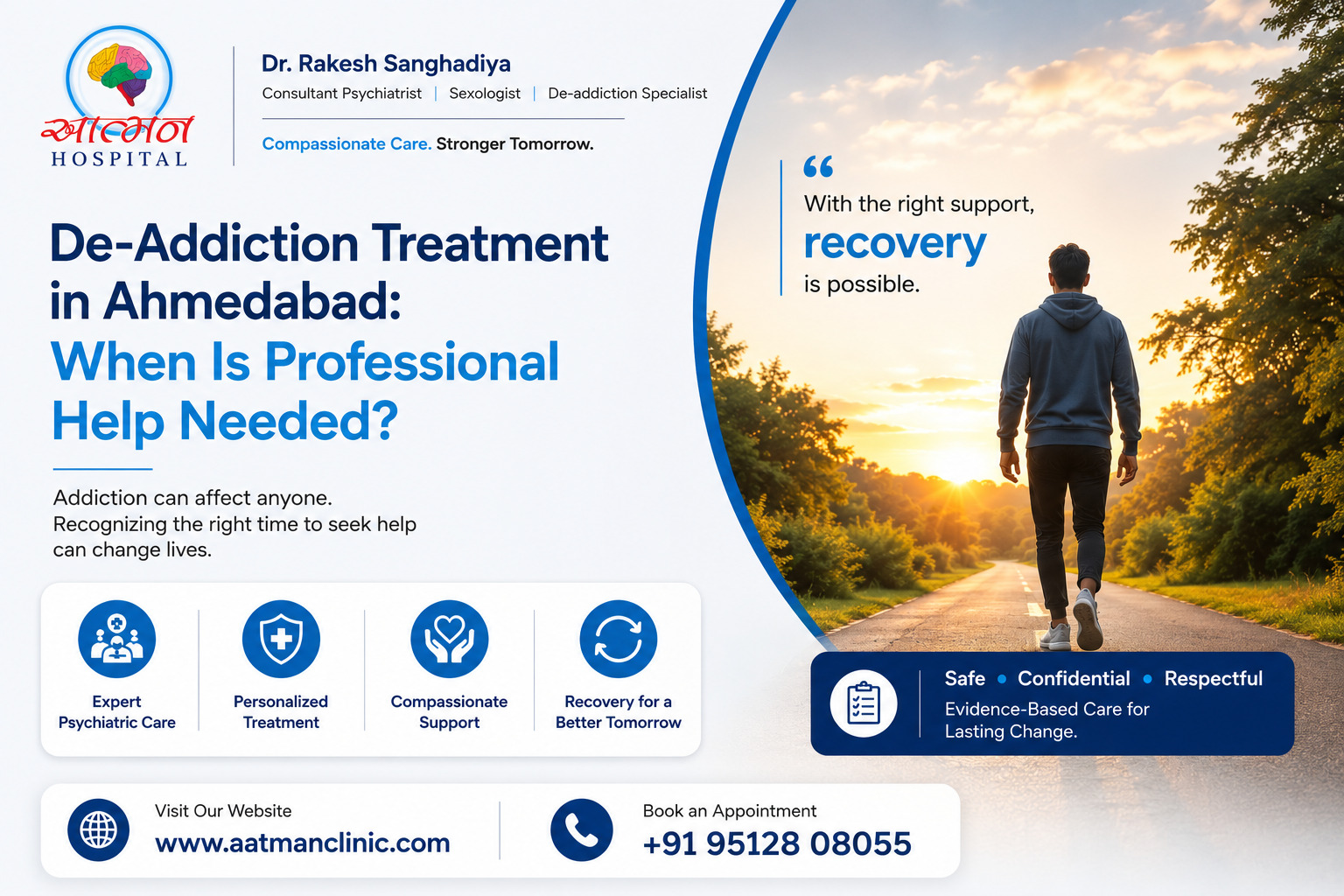
De-Addiction Treatment in Ahmedabad: When Is Professional Help Needed?
31
Jul , 2026
Latest Posts

De-Addiction Treatment in Ahmedabad: When Is Professional Help Needed?
Understanding When Addiction Requires Professional Support
Addiction is a complex health condition that can affect a person's physical health, mental well-being, relationships, career, and family life. It may involve alcohol, drugs, prescription medicines, or other addictive substances and behaviors. While many people try to stop on their own, quitting without appropriate support can be difficult—and in some cases, unsafe.
The good news is that addiction is treatable. With timely intervention, professional care, and ongoing support, many people can work toward recovery and rebuild a healthier, more stable life.
But an important question remains: When is professional help actually needed?
If substance use is becoming difficult to control, affecting everyday responsibilities, damaging relationships, or causing repeated health problems, it may be time to seek professional support. For individuals and families looking for de-addiction treatment in Ahmedabad, understanding the warning signs and treatment process can make it easier to take the first step.
What Is Addiction?
Addiction is more than a habit or a lack of willpower. It involves changes in the brain and behavior that can make it difficult for a person to control their substance use, even when they understand the negative consequences.
A person struggling with addiction may:
- Feel a strong urge or craving to use a substance
- Find it difficult to reduce or stop using it
- Spend significant time obtaining, using, or recovering from the substance
- Continue using despite health or relationship problems
- Neglect work, education, or family responsibilities
- Need increasing amounts to achieve the same effect
- Experience withdrawal symptoms when they stop or reduce use
Addiction can affect people from different backgrounds and age groups. It is also important to remember that addiction is not a moral failure. It is a health concern that deserves understanding, compassion, and appropriate treatment.
When Is Professional De-Addiction Treatment Needed?
Not everyone who uses alcohol or another substance develops an addiction. However, certain signs may indicate that substance use has become a serious concern.
1. You Have Tried to Stop but Cannot
One of the clearest warning signs is repeatedly trying to quit or reduce substance use but being unable to maintain the change.
You may promise yourself that you will stop, set limits, or take breaks, but eventually return to the same pattern.
This does not mean you lack discipline. Addiction can create powerful physical and psychological dependence, making professional support an important part of recovery.
2. Substance Use Is Affecting Your Daily Life
Professional help may be needed when substance use begins interfering with normal responsibilities.
For example, you may notice:
- Frequent absences from work
- Declining academic performance
- Difficulty managing household responsibilities
- Loss of interest in previous activities
- Spending more time around substance use
- Neglecting personal health or hygiene
When addiction begins to take priority over important areas of life, seeking help early can prevent the situation from becoming more difficult to manage.
3. Your Relationships Are Suffering
Addiction rarely affects only one person. It can have a significant impact on spouses, parents, children, friends, and colleagues.
You may notice:
- Frequent arguments at home
- Loss of trust
- Increased secrecy
- Social isolation
- Financial conflicts
- Emotional distance from family members
If substance use is repeatedly creating conflict or damaging important relationships, professional treatment may help address both the addiction and the emotional challenges surrounding it.
4. You Experience Withdrawal Symptoms
Some people experience physical or psychological symptoms when they stop or reduce substance use.
Depending on the substance and the individual's health, symptoms may include:
- Anxiety or irritability
- Restlessness
- Sleep difficulties
- Sweating
- Tremors
- Nausea
- Strong cravings
- Mood changes
Withdrawal can sometimes be medically serious, particularly with certain substances. Therefore, people with significant dependence should not assume that suddenly stopping is always safe.
A qualified healthcare professional can assess the person's condition and determine whether medically supervised withdrawal management or other treatment is appropriate.
5. You Need More of the Substance to Feel the Same Effect
Over time, some people develop tolerance, meaning they need larger amounts of a substance to experience the same effect.
This can increase the risk of harmful use and other health complications.
If you notice that your consumption has gradually increased or that previous amounts no longer have the same effect, it is worth discussing the situation with a healthcare professional.
6. You Continue Despite Negative Consequences
Another important warning sign is continuing to use a substance even after experiencing clear negative consequences.
For example:
- A health problem has developed
- Family relationships are deteriorating
- Work performance is declining
- Financial problems are increasing
- Legal or social problems have occurred
When a person continues using despite these consequences, it may indicate that addiction has become difficult to control without professional intervention.
Why Early Addiction Treatment Matters
Many families wait until a crisis occurs before seeking help. However, early intervention can be valuable.
Seeking support sooner may help a person:
- Understand the underlying causes of addiction
- Address substance dependence appropriately
- Identify mental health concerns
- Develop healthier coping strategies
- Reduce the impact on relationships and responsibilities
- Learn strategies to prevent relapse
- Build a structured recovery plan
Addiction can become more complicated when it continues for a long period. Therefore, recognizing the problem early and seeking appropriate support can be an important step toward recovery.
What Causes Addiction?
There is rarely one single cause of addiction. Instead, multiple factors may interact.
Biological Factors
Some individuals may have a greater vulnerability to addiction due to genetics, brain chemistry, or other biological factors.
Psychological Factors
Mental health concerns such as anxiety, depression, chronic stress, or unresolved emotional difficulties may influence substance use.
Some people may use substances as a way to cope with difficult emotions. Unfortunately, this can create a cycle in which substance use temporarily reduces distress but eventually creates additional problems.
Social and Environmental Factors
Peer pressure, family environment, social circumstances, easy access to substances, and exposure to substance use can also influence risk.
Trauma and Difficult Life Experiences
Some individuals may turn to substances while coping with trauma, grief, abuse, or significant life stress.
Understanding these factors is important because effective treatment should focus on more than simply stopping substance use. It should also consider the person's overall mental health, environment, and long-term needs.
What Does De-Addiction Treatment Involve?
The treatment approach depends on the substance involved, the severity of dependence, the person's physical and mental health, and their individual circumstances.
A professional treatment plan may include:
Assessment
The first step is usually a detailed evaluation of substance use, physical health, mental health, family history, and daily functioning.
Withdrawal Management
For some individuals, withdrawal may require medical supervision. The healthcare team can determine the safest approach based on the person's condition.
Psychiatric and Psychological Support
Addiction can sometimes occur alongside anxiety, depression, trauma, or other mental health concerns. Addressing these issues can be an important part of recovery.
Counseling and Behavioral Support
Counseling can help individuals understand triggers, manage cravings, develop healthier coping mechanisms, and work toward lasting behavioral changes.
Family Support
Family involvement can play an important role in recovery. Families may also need guidance to understand addiction and learn how to support their loved one without unintentionally encouraging harmful behaviors.
Relapse Prevention
Recovery does not always happen in a straight line. Treatment may include identifying triggers, creating coping strategies, and developing a plan for maintaining recovery over time.
How to Choose Addiction Treatment in Ahmedabad
If you or someone you care about is looking for addiction treatment in Ahmedabad, consider the following factors:
- Is the treatment approach personalized?
- Are qualified mental health professionals involved?
- Does the program assess both physical and psychological health?
- Is there support for co-existing mental health concerns?
- Does the treatment involve family education when appropriate?
- Is there a plan for long-term recovery and relapse prevention?
- Is confidentiality and dignity respected?
Choosing professional care is an important decision. The right approach should focus on the individual rather than treating addiction as a one-size-fits-all problem.
How Families Can Help Someone With Addiction
Watching someone struggle with addiction can be painful and confusing. Family members may feel anger, fear, guilt, or helplessness.
You can support your loved one by:
- Talking to them calmly and without judgment
- Expressing concern about specific behaviors
- Encouraging professional help
- Avoiding shame or unnecessary criticism
- Setting healthy boundaries
- Learning about addiction and recovery
- Seeking professional guidance for yourself when needed
You cannot force someone to recover, but you can encourage them to seek help and create a supportive environment for positive change.
Don't Wait for Addiction to Become a Crisis
One of the biggest misconceptions about addiction is that a person must "hit rock bottom" before treatment can work. In reality, there is no need to wait for a major crisis.
If substance use is becoming difficult to control, affecting health, damaging relationships, or interfering with daily life, professional help may be appropriate.
Early support can help individuals and families understand what is happening and explore suitable treatment options before the situation becomes more complicated.
Seeking De-Addiction Support at Aatman Clinic
At Aatman Clinic, we understand that seeking help for addiction can be difficult. Many individuals delay treatment because of fear, shame, or uncertainty about what others may think.
Our approach focuses on treating individuals with respect, compassion, and confidentiality while helping them understand the factors contributing to their addiction and explore appropriate professional support.
If you or someone in your family is struggling with substance use, don't wait until the problem becomes overwhelming. Taking the first step toward professional guidance can be an important part of the recovery journey.
Ready to Take the First Step Toward Recovery?
If addiction is affecting your health, relationships, work, or everyday life, it may be time to seek professional support.
Contact Aatman Clinic to discuss your concerns and understand the available treatment options.
Frequently Asked Questions (FAQs)
1. When should someone seek de-addiction treatment?
Professional help may be appropriate when a person cannot control their substance use, repeatedly tries to quit without success, experiences withdrawal symptoms, or notices that addiction is affecting their health, relationships, work, or daily responsibilities.
2. Is addiction a lack of willpower?
No. Addiction is a complex health condition influenced by biological, psychological, and social factors. While personal motivation is important, professional treatment can provide additional support for managing dependence and developing healthier coping strategies.
3. Can someone recover from addiction?
Yes. Addiction is treatable, and many people work toward long-term recovery with appropriate professional care and ongoing support. Recovery can be different for every individual.
4. Is it safe to stop using a substance suddenly?
It depends on the substance, the level of dependence, and the person's health. Withdrawal from some substances can be medically serious. Anyone with significant dependence should consult a qualified healthcare professional before attempting to stop.
5. How can families help someone struggling with addiction?
Families can encourage professional support, communicate without judgment, learn about addiction, and establish healthy boundaries. Professional guidance can also help families understand how to support recovery effectively.
Final Thoughts
Addiction can affect every part of a person's life, but it does not have to define their future. Recognizing the warning signs and seeking professional support at the right time can make an important difference.
Whether you are concerned about your own substance use or worried about someone you love, early professional guidance is worth considering. With the right support, recovery is possible, and the first step can be a simple conversation.